January 25, 2009

Moving

We've packed up. We've moved out.  And, as of today, it's official!  

We're bidding farewell to our lovely blogpost-hosted blog.

From this post on, you can visit us at: www.fromthepewsintheback.com.  We'll no longer be updating this blog, so we appreciate you updating your bookmarks.

We're also updating our email address: fromthepewsintheback@gmail.com

See you over at our new website & email!

Jen & Kate

Read more!

January 22, 2009

Waiting for David: 1 Samuel 16

This is the first of a three-part series by Felicia Schneiderhan on 1 & 2 Samuel.

A turning point in my faith came when I stopped disagreeing and debating with everything I read in the Bible ("Nobody lives to 800!"). I began reading the Bible as a story of how people relate to God. And then I opened Samuel, which is the story of how I relate to God.

Samuel, the prophet, is mourning because the first king, Saul, is not doing so hot. God tells Samuel to go see Jesse of Bethlehem, that one of his sons will be the next king.

In Bethlehem, Jesse parades out seven sons. They all look like strong men who would make a good king and Samuel's ready to pick one. But God tells Samuel, don't focus on outward appearance – God looks at the heart; and as each of the seven pass in front of him, Samuel knows he's not the one. When all seven have gone by, Samuel asks Jesse, "Are these all the sons you have?"

When I heard this read in Mass one Sunday, I laughed out loud. Samuel has just seen seven fit, strong, intelligent young men, and he has the gall to ask Jesse, "Um, do you have any more sons?"

Of course, there is one – the youngest, out tending the sheep. Samuel tells Jesse to send for him, that they won't sit down till he gets there. Maybe you know the rest of the story – ruddy little David appears, God tell Samuel, "Rise and anoint him; he is the one," and David starts his journey to becoming Israel's king.

We never know what we'll find in the Bible that we will relate to, what story will open up the text for us, show us how applicable it is in our lives today. For me, this story suddenly made the entire Bible very alive, very current.

I am like Samuel in nearly every decision I make. I get nervous about making important decisions and, afraid I'll chose wrongly, or that I won't get what I need, I'll grab the first thing I see because it looks fine on the outside. My impatience is based on fear and selfishness. I fear the space of not knowing, and so I make a decision as quickly as possible to fill it up.
But I am learning to wait. I am learning to go where God leads me, and then wait for His choice to appear.

Last month, my husband and I moved from Chicago to northern Minnesota. For two months I searched for a place to live and kept coming up with nothing. Things would seem fine out the outside, but something would tell me, wait, wait. And then, two weeks before we were set to move, when I was starting to get a little panicked, we found a place more perfect than we could have imagined. It's better than anything I could have requested from God, reminding me that His will for me is always better than any laundry list of requests I could write.

Like Samuel, I have to remember just to keep standing until the right king appears.
***
Felicia Schneiderhan is a freelance writer based in Duluth, Minnesota.
Photo from Felicia's camera.  Her own, Duluth-based David.

Read more!

January 20, 2009

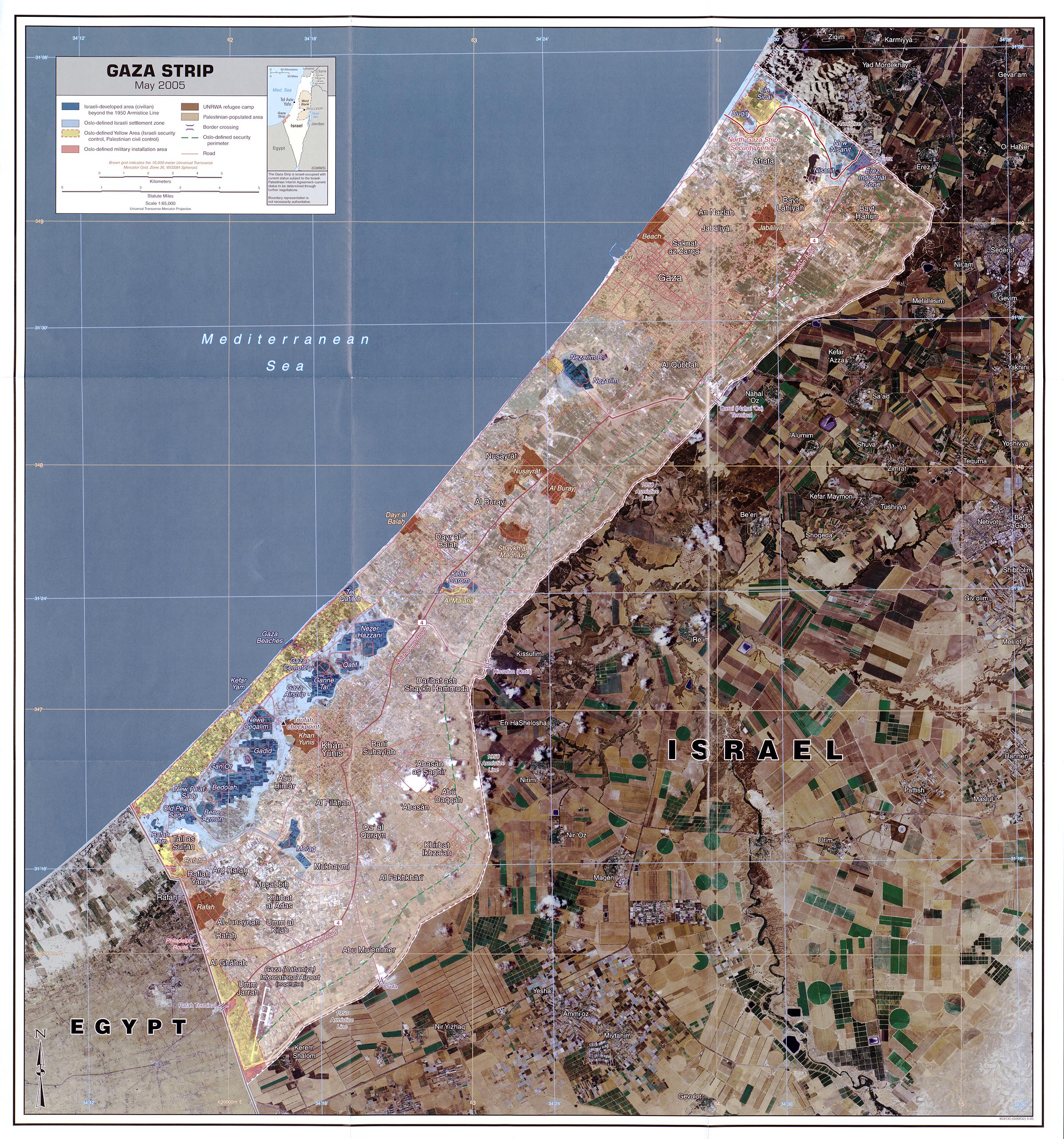
Reflection: Gaza

I’ve had this church song in my head for awhile. It’s a psalm, and the refrain goes, “Come, let us go rejoicing, to the house of the Lord.”

I ignore it until I can’t anymore, this war in Gaza. I let it drift around with the song until I get to the third verse: “Peace in Jerusalem, peace in our homes, and peace within us forever.”

So I look, at the pictures and the articles. The thing that splits me to the core—it’s not the images of broken bodies. To those I react, suddenly covering the picture with my hand, but the horror keeps my center frozen.

I watch a video of anti-war protesters in Israel, and the counter-protesters are chanting “Traitor” at the peaceniks, and they’re thrusting their hands out in front of them in this way, out in front high up near their faces—

Before I’ve finished seeing, I’m making a noise of awful grief, a high noise, without tears really, and my hand covers my face. I don’t want to see this, these young Jewish men, looking like Nazis.

Please understand. I’m not saying this horror is on the level of the Holocaust. But what I see is a circle of hate, and I see it closing, spinning on itself.

This war is unjust, and the lives it tears may stretch or be pulled, to add to the circle, to enclose us all further.

I pray for peace in the world. I pray for the courage that engenders peace, in Jerusalem, our homes, within us—the courage to fear each other less, even when the threat is real.

Without this grace, we will always be ready to cause harm, and the trap will close. With this grace… well, let us try it, and see.

Photo from: http://www.lib.utexas.edu/maps/middle_east_and_asia/gaza_strip_may_2005.jpg

Rebecca Fullan has faith, seeks understanding. And sometimes vice versa.


Read more!

January 18, 2009

Here I am (now, whaddaya want me to do?!)

We were on our way back from a spring break service trip to Kentucky, where we spent a rain-drenched week helping build houses with the Christian Appalachian Project. Having spent the night on our two-day trek back to Massachusetts at a hotel in Philadelphia, I dragged my weary body to the lobby to grab some free continental breakfast. The "morning people" in my group (I'm definitely not one) were already finishing off their cereal, muffins, and cups of bad hotel coffee when I arrived, but Jaime, our campus minister, stayed at the table with me so I wouldn't have to eat alone. As we chatted about the week, Jamie asked, somewhat casually, "Have you ever thought you might have a calling to ministry?" At that moment, something clicked. For just a split second, everything seemed clear. It wasn't a dramatic thing - I didn't jump out of my seat and yell "Here I am, Lord!" or prostrate myself on the ground and sigh "Speak, for your servant is listening." But in a more subtle way, in that moment, I felt myself open up to whatever it was that was pulling me. What that was, I had no idea, but somewhere deep inside, I answered it anyway.

Lately, this brief moment of clarity seems a distant memory, and I look back at my younger self, so sure and so eager to answer the call, with envy. I finished my MDiv in June, yet I feel directionless, and, lacking something concrete to orient me, I'm frustrated and restless. I find myself constantly questioning the whole concept of calling. I want to know what I'm called to do. I want clear directions from on high, blueprints for the ark, to hear the still, small voice tell me "this is your life's work, go and do it" – and then give me clear and specific directions for how to get it done.

But today's readings remind me that that's just not how it works. In the first reading, Samuel answers God when his name is called. Despite Samuel's words, "speak, for your servant is listening," the passage doesn't tell us what God said back. In fact, it doesn't even tell us that God spoke back. For all we know, Samuel didn't hear anything concrete in reply, yet we are assured that God was with Samuel, guiding his life and work. Similarly, in the Gospel reading, Andrew drops what he's doing to follow Jesus, despite not knowing, really, what he was getting himself into. I imagine that when he saw Jesus, and heard John refer to him as the Lamb of God, he had a moment like mine, where something clicked and things felt clear, though he had no concrete idea of what to expect. I know that others have answered a call without knowing what, exactly, the call is. This doesn't make me feel any less frustrated, and it certainly doesn't erase my desire to have plans laid out for me. But it does help to be reminded that, just because we don't have a clear idea of what our calling is, doesn't mean that we aren't answering it. Perhaps, like Samuel, even as I type, God is ensuring that my words will not be without effect?

Kate Henley Long is a nanny, choreographer, queer activist, writer, and wannabe TV critic. She lives with her partner in Cambridge, MA, and spends much of her time in a general state of religious and existential crisis.

Read more!

January 16, 2009

My Aunt Mary

From the Pews in the Back is becoming more and more real every day (we just received the proof pages!). As Jen & I gear up for the book's printing, my mind is wandering more frequently to the kinds of conversations and questions that might happen around this book.

My Aunt Mary is my dad's oldest sister. She's in her mid-60s and was at a Franciscan college during Vatican II. She loves the liturgical changes and is always ready for a theological debate. I saw her over Christmas and she was eager to tell me that she is an avid reader of the Call to Action Young Adult Catholic blog. A friend of hers had forwarded her the link and they both read daily and discuss it occasionally.

This is so exciting to me! I love that these women are excited about what young adult Catholics are thinking and blogging about....and I am very impressed by their tech-savviness.

I am hopeful that this book and blog engage conversations and discussions.

What kind of conversations would you like to have with Catholics of older or younger generations?
Kate Dugan is one of the co-editors of From the Pews in the Back and is indebted to Aunt Mary for countless conversations about American Catholicism.

Read more!

January 14, 2009

The Adventures of Catholic Woman

There are times I feel like I am a character in a comic book when it comes to my faith. Like Superman, who is considered the representative of all the positive ideals of America, I feel that people see me like that with regards to my faith – that I am Catholic Woman, fearlessly swooping in and taking care of their Catholic needs until there's a happy ending. That would be fine except for the following:

1. I don't have any superpowers.

2. I don't have a costume.

3. I'm not the positive embodiment of being Catholic.

To explain where my idea of “Catholic Woman” came from: a good number of my everyday friends and acquaintances are not Catholic, so I am called upon to answer questions about Catholicism. Most of these questions are along the lines of “Why do Catholics do/believe (fill in the blank)?” and I'll happily answer those as best I can. In the course of answering the question, there is an assumption that I agree with everything the Church says, when in reality I don't. So the question I face next becomes, “Well if you disagree with it, why are you still Catholic?”

I am still a Catholic – partly out of cultural identity, but also out of a true belief that despite my odds with the Church I still feel that this is where I belong. I believe I can make the Church stronger due to my disagreements than by leaving. However, from what I've gathered from others, is that if I identify as a Catholic, then I must (in their opinions) agree with everything.

Spare me the cape and tights, and while I'd like the superpowers I don't think they'll be coming anytime soon. I'm not “Catholic Woman” fearlessly flying into the ecumenical problems of the world and offering up the “right” Catholic answer to those in need. The beauty of the Catholic Church is that it is universal; there is no one embodiment. We are many, we are wide-ranging in looks and temperaments. Our faith, however it may come and whatever its strengths, is greater than any superhero ever could be.


Sarah Albertini-Bond fully confesses to not being a superhero but thinks superpowers would be cool and is not sure she could pull off a cape.

Read more!

January 11, 2009

Mark 1:7-11: Cindy's in El Salvador

As I sat down to write this reflection, I opened my e-mail to find a note from my soul-sister Cindy, who is traveling through Central America and spent the day in El Mozote, El Salvador, the site of the 1981 massacre of more than a thousand civilians by graduates of the School of the Americas (now known as the Western Hemisphere Institute for Security Cooperation, or WHINSEC). From my cozy office in Wisconsin, I am tearing up reading her description of the city today – twenty-eight years later there are still visible bullet holes and bloodstains.

Cindy and I first met in a big red house in south Minneapolis when we had the good fortune of being part of the St. Joseph Worker program, along with three other (brilliant, charming, and gorgeous) women. We lived together, prayed together, ate together, and grew together. Cindy and I worked in ministries that put us in relationship with our immigrant neighbors – Cindy as a medical translator, and I in a transitional home with immigrant women. As the days passed, I had the joy of watching Cindy grow, of cheering her on as she became more confident of herself and her desire to make our world and our church always more loving and hospitable.

This week's gospel reading is Mark's story of the baptism of Jesus, which in this gospel marks the beginning of Jesus' public ministry. It some ways, it doesn't make sense why the sinless child of God would be baptized. But if we think of baptism as more than simply the forgiveness of sins, it becomes clearer. Baptism is always a beginning. It is a formal initiation rite in which we also mark ourselves as children of God. To each of us at our baptism, God has said, "Behold my beloved; with you I am well pleased." With these words, God commissioned Jesus, and all of us, to spread the good news of healing and welcome. We do not go out to serve each other to make God love us – we do it because we are so loved, and we can't bear to keep it to ourselves.

This Sunday also marks the beginning of ordinary time in the liturgical year. I like that the baptism of Jesus starts this season off. Remembering such an extraordinary event as the heavens parting and God's voice ringing out reminds us that even the average and the everyday is a chance to be suddenly surprised by the ways God works in our lives.

As my year with the St. Joseph Workers went on, I found myself "commissioning" Cindy in various ways. "I've never done anything like this before," she said at the first anti-war protest we attended together; by the end of the year, she was dragging me onto the streets. "Can I say that?" she'd ask when she had shocked herself with her righteous anger; "Yes, Cindy! Trust yourself!" I would say. She hasn't stopped since. And I sit here and I imagine her in El Mozote, and I know that she continues to follow God's call in every way she can, even when it's heartbreaking or scary.

Cindy, too, has been the voice of God in many of my days, calling me beloved even when I didn't feel it. "Oh, Johänn," she'd say (her nickname for me), "you're so brave." Or smart, or kind, or beautiful, or passionate, or any number of superlatives I couldn't believe about myself unless she said it. She drew out parts of me that I didn't know I had – a fierce protectiveness and more patience than I've ever exercised. She continues to teach me that being the beloved of God means following the call to border towns, to the gates of Ft. Benning, to El Mozote, to shelters and seminaries and wherever the journey takes us next.

Picture from the author's collection. From right, Cindy, Johanna, and one of their soul-sisters and housemates, Berit, at the Minneapolis March for Immigrant Rights, 2005.

Johanna Hatch is a feminist activist, writer, and amateur hagiographer living in Wisconsin and working in non-profit administration. She is a graduate of the College of Saint Benedict and the recipient of the Katharine Drexel Scholarship at the Washington Theological Union. She currently resides in Wisconsin with her spouse Evan.

Read more!

January 8, 2009

Vulnerability and Prayerful Discernment

Reading today’s Gospel, I felt uncomfortable. I find that a feeling of discomfort around something I come across in Scripture or in life usually points to something bigger that I should start paying attention to.

I felt uncomfortable because I identified with the “man full of leprosy,” this incredibly vulnerable person whom Jewish society rejected and deemed necessarily sinful by virtue of his physical state, an apparently humble person who threw himself down on the ground when Jesus approached, pleading with him to make him “clean.” When push comes to shove, I don’t like to think of myself as vulnerable, nor does the idea of being unclean necessarily appeal to me. Quite to the contrary, I would rather think of myself as perfectly capable of dealing with whatever comes my way, and like most people, I would imagine, I like to think of myself as a good person, not any more sinful or unclean than the next person. But here it is, just the same—that discomfort, that reminder that just like the leper in the story, I am filled with vulnerability and in need of Jesus’ healing.

And I felt uncomfortable because I identified with Jesus, too. I like to think of Jesus as the ideal person, in some ways, an example I’d like to emulate. Today’s reading made me realize that I have come to make an idol of busy-ness, of doing, that my expectation of Jesus was to bustle about, healing every ailing and vulnerable person he came across. Yet his example convicted me, helped me realize that I don’t want to take the time to “withdraw to deserted places to pray” as Jesus did. I’d much rather busy myself with the good work to which I feel called, but, in reality, discernment is ongoing. With the end of my MDiv now in sight, I need to be right in the thick of that prayerful discernment in the months ahead.

Moving forward into the day, to what vulnerabilities does this Gospel reading call your attention? To which deserted places are you being encouraged to withdraw and pray?

Jen Owens took the above photo on her first full day in Belize City, Belize, around this time last year, when she accompanied two University Ministry staff members and ten Marquette students on a service and immersion trip there. Jen still wears the solidarity ring that Fr. Dick Perl, SJ, gave her and the other participants, because it makes her feel just a little bit uncomfortable.

Read more!

January 7, 2009

New Year's Resolutions

I can't help myself. This time of year always gets me into the resolving mood. Increase the number of miles I jog a week. Start yoga. Find a meditation group that I like. Cut mint chocolate chip ice cream out of my diet. Keep my personal blog updated. I'm always disappointed in how stereotypical I am about it...and amazed by how my resolve crumbles by my birthday at the end of February.

And it's a beautiful time in the Catholic calendar. We start of the year celebrating Mary, reminding ourselves of the potential for goodness and sacredness all around us. It is an invigorating time of the liturgical year

I have a friend who thinks about New Year's Resolutions in a beautiful way. In recent years, she has decided that her re-commitment to ideals around the first of each year would be less about a "grin & bear it" resolve and more about a change in attitude approach. Her approach makes January a month of reflection and evaluation and deciding how to direct ourselves in the next year, rather than guilt-ridden re-commitments

I like it. I'm inspired by it.

What are you inspired by this January?

Read more!

January 1, 2009

Highlights!

As 2008 ended and 2009 begins, we are reminded of how much we've enjoyed the outgoing year with From the Pews in the Back. These are our top five highlights...

#5: Learned about copyright law in December. We're now buddies with Oregon Catholic Press.

#4: Moved headquarters from Milwaukee & Juneau to Cambridge & Olympia.

#3: Presented at the College Theological Society Convention in May. Gratitudes to the Women & Religion conveners.

#2: Expanded the blog in October. Three cheers to all our contributors!

#1: Found a publisher in March! A deep bow of thanks to Liturgical Press.

Blessings and peace be with you in the year ahead,

Kate & Jen

Read more!

December 25, 2008

Oh Holy Night!

As I write I’m proctoring my last religion final. Alleluia! Nevermind the fact that I still have to grade these finals and read 85 two week old essays I still haven’t gotten to. For the first time this long December I finally feel like rest is near. Very soon I will be on the road home and ready to celebrate with my family. This is our fifth Christmas without my mother, and the holidays haven’t been the same without her. The last Christmas we celebrated together my mom was so physically sick with the cancer she was battling that my sister and I had to take care of everything my mom usually did – decorating the house, shopping for my little brother and sister, writing Christmas cards, baking and cooking Christmas dinner. I remember that night after we had finished cleaning from dinner my mom told my sister Stefini and I that she was proud of the job we had done. We cried as she told us she was no longer worried about leaving our younger siblings behind because they had us to watch over them. Exactly three weeks later she was gone.

I can’t help but have bittersweet emotions this time of year. The light and joy of the Christmas season is slightly darkened by the absence of my mother. What used to be my favorite holiday isn’t quite the same without my mom there to decorate the tree, to lock us out of the room so she could wrap presents or to tell us all to hurry up or we would be late for Christmas Eve mass. Especially now that my nieces are growing up, I wish more than anything that my mom was still with us on Christmas morning when my bundled-in-blankets-siblings and I would gather in the family room for my father’s annual Christmas morning prayer and reminder of how lucky we are because “back home in Tonga we were lucky to get an orange for Christmas.”

My mom’s favorite Christmas song was Oh Holy Night, perhaps subconsciously the reason why I have ten different versions of it on my iTunes Christmas playlist. I play the song over and over and sing along, but never thought much of the words. Yesterday I pulled up the lyrics and read along to John Legend’s rendition:
Oh holy night
The stars are brightly shining
It is the night
Of our dear Savior’s birth
Long lay the world
In sin and error pining
‘Til he appeared and the soul felt its worth
A thrill of hope
The weary world rejoices
For yonder breaks
A new and glorious morn
Fall on your knees
Tears fell down my cheek.
Oh hear the angel’s voices
The memory of mother’s voice echoed in my heart.
Oh night divine
Oh night when Christ was born
Oh night divine
Oh night divine
I started to understand why this song was her favorite. A convert to Catholicism when I was 5 years old, my mother’s sense of faith always amazed me. I remember studying theology in college and calling my mom for her perspective that was so different from mine. She taught me so much about this faith I love.
Led by the light of faith serenely beaming
With glowing hearts by His cradle we stand
So led by light of a star sweetly gleaming
Here come the wise men from Orient land
The King of Kings lay this in a lowly manger
In all our trials born to be our friend
With tears streaming down my face I listened to John Legend belt out the song and I was finally in tune with the true Christmas spirit – not the Santa Claus-holiday sale-merry materialistic Christmas decoration wonderland kind of spirit, but the awestruck-wholeheartedly grateful for the gift of Incarnation spirit. My eyes danced across the last verse.
Truly he taught us to love one another
His law is love and His gospel is peace
Chains shall He break for the slave is our brother
And in His name all oppression shall cease
Sweet hymns of joy in grateful chorus raise we,
Let all within us praise His holy name
I think of my mother. This is my prayer this Christmas.
May we love one another.
May we only live by the law of love and the gospel of peace.
May we work to break chains wherever they bind.
May we see everyone as sister and brother.
May we toil to end all oppression.
And may we forever sing hymns of joy and praise His holy name.
Amen.
Merry Christmas!

Tefi Ma’ake looks forward to her two weeks of Christmas break, to spending the Holidays in the chilly San Diego weather, to watching her nieces on Christmas morning…and of course to grading those final exams and essays!

Read more!

December 21, 2008

Birthing God: Luke 1:26-38

We are all meant to be mothers of God. What good is it to me if this eternal birth of the divine Son takes place unceasingly but does not take place within myself? And, what good is it to me if Mary is full of grace if I am not also full of grace? What good is it to me for the Creator to give birth to his Son if I do not also give birth to him in my time and my culture? Then, then, is the fullness of time: When the Son of God is begotten in us. --Meister Eckhart
I think of Advent as pregnant time. It's a cozy time, a preparatory time. As the days shrink towards Solstice I become more of a homebody, hunkering down waiting for the rebirth of the sun, as well as the Son. This year, the fourth Sunday of Advent falls on that darkest, shortest day of the year.

I am studying to be a doula (a specially trained assistant and advocate for women giving birth), and so I spend a lot of time thinking about pregnancy and birth, especially for someone who has no children. I've been interviewing friends who have given birth in the past year. It's amazing to hear how their lives and relationships, their very bodies, have changed and stretched to welcome the unexpected.

On this final Sunday of Advent, we hear Luke's story of the Annunciation. Mary receives the surprising news that she is has found God's favor and is being asked to carry the Incarnation into being. "But how can this be?" she asks, incredulous. The angel answers: the Holy Spirit will be upon you. 

God is calling out to each of us, "Hail, full of grace, I am with you!" God is asking us to carry the Holy Child to everyone we encounter. "How can this be?" we may ask. But as Mary quickly learned, when we let the Spirit in, surprising things happen. Our lives are stretched and rearranged by bearing God. It is often uncomfortable, sometimes awkward, but always magical. And the world is waiting for our "Yes!" in these chilly dark days. God is asking for our permission to create something new with us and through us, to bring love to the unloved, justice to the oppressed, and companionship to the forgotten.

Sometimes I think Mary gets terribly toned down in our remembrance of her. This gospel passage, however, shows us a Mary who talks backs, asks questions, and makes the bold decision to allow her life to be altered to birth God into an aching world. This is the Mary that I aspire to live like.

As Advent draws to a close, how will you let the Spirit in? What does it mean to be the handmaid of the Lord? What does it mean to give birth to God in this time and place?

Johanna Hatch is a feminist activist, writer, and amateur hagiographer living in Wisconsin and working in non-profit administration. She is a graduate of the College of Saint Benedict and the recipient of the Katharine Drexel Scholarship at the Washington Theological Union. She currently resides in Wisconsin with her spouse Evan.
Picture from ClipArt.com

Read more!

December 19, 2008

Advent & Addictions

I'm reading Sarah McFarland Taylor's Green Sisters: A Spiritual Ecology, a really wonderful survey of the incredible way Catholic nuns are pushing the bounds on environmental issues--from hybrid cars, to eco-friendly remodels, to CSAs, to commitments to only wear second-hand clothing. One of the women Sarah interviewed talks about how one of the ways she sees her environmental commitment is as an effort to slow addictions--addiction to fossil fuel and television and speedy food, obviously. But she also mentioned addiction to work and to perfectionism. And these things caught my attention.

Greg (my husband) and I are just six weeks back from our three-month adventure in Argentina. I've been a scurry of stress to find jobs, cars, an apartment, furniture, renters' insurance, finish some work on From the Pews in the Back, keep up the blog. I've even found myself working about how quickly I can make some friends! Is it possible I've become addicted to my own life-creating busy-ness?

What I haven't done yet is go hiking in the Olympic National Forest that is almost literally out our backdoor. It's the third week of Advent and I'm still promising myself to teach Greg "O Come, O Come Emmanuel." Our Christmas tree stands light-less and ornament-less in the corner, waiting ever-so-patiently for us to find our collective moments of joy to decorate it.
And I know that these things, more than cars or the perfect couch, are what really make life.
So as I enter these final whispers of Advent renewed in my commitment to be careful about the way my addictions to busy-ness hurt me and my loved ones. And, if you feel so inclined, I invite you to do the same.

Kate Dugan is one of Olympia, Washington's newest residents and one of the co-editors of this blog & From the Pews in the Back.

Read more!

December 17, 2008

Sounds of the Season


My boyfriend prefers not to listen to Christmas music before Christmas Eve; he thinks that songs about Christmas should be reserved for Christmas proper. But, I cannot help myself. I love the carols, the canticles, even electronic jazz piano versions of classic favorites. This music is our common holiday language. How many songs (beyond such bar favorites as “I Will Survive” or “Livin’ on a Prayer”) do so many people know by heart and are willing to sing loudly and without self-consciousness in a room full of people?

There are many fantastic songs of the season, secular and religious, and my favorites are the ones that are thick with theology (especially in their rarely sung third or fourth verses): The First Noel; The Holy and the Ivy; Lo! How a Rose E’er Blooming; Joy to the World. Sometimes these songs carry an instructive air; they tell us what we believe. Other times they are solemn and devotional, allowing for us to retreat inside ourselves and examine our own notions of what it means that God was born human. This music to me is a method of meditation, a reminder of the constant presence of something, of a faith in a miraculous, wonderful, and downright unbelievable event. The music takes us there. It takes us to the annunciation, to the manger, to epiphany and the coming of the wise men. The best songs even take us into the hearts of the kings, the shepherds, the angels, the holy family.

J. Chris Moore, in a gorgeous choral arrangement of Four Canticles for Christmas reminds us of the humble and glorious first moments of the Christ child’s life. Listening to the fourth canticle, “The Worlds Rejoice”, I am left speechless by its precise and reverential description of the wonder of the birth:

The night softly envelops her as she sits quietly.
Angels whisper their delight. The leaves create a lullaby.
The earth holds her breath.
A child.
Peace has come to a troubled place.
And the worlds rejoice.

Music is a kind of poetry, able to capture in the harmonious combination of words and notes what cannot be captured by words alone. And perhaps these songs are not the most historically accurate; perhaps they often represent older theological ideas or take literary license with biblical passages. But they are a holiday ritual, and singing them is a type of homage paid to the wonderful, to the miraculous, to the mysterious.

Rebecca Curtin is dreaming of a warm Christmas, and can’t wait to hop a flight from Boston to spend the holidays with her family in San Diego. Her Christmas music playlist is already programmed on her iPod for the long plane ride.

Read more!

December 15, 2008

A Mass of Contradictions: God With Us

I searched four stores before I found them. I sifted through piles of white and red before my fingers curled around purple and pink. Finally, a full compliment of Advent candles to round out my wreath.

The first person I told was my girlfriend, Charlotte. We now have a double dose of candle-prayer rituals, which is perhaps unexpected, given that Charlotte once asked me if she should check atheist or agnostic on a survey. But it was her idea to buy one of the glass-encased religious candles they sell at our grocery store.

"You can find the right prayer for us," she said. We were weary with job-searching. We chose a rainbow candle.

This began a nightly ritual of lighting the candle, breathing out the day, and speaking aloud. We take turns choosing readings, from the Bible, from poetry, from the writings of physicist Richard Feynman. They have in common a cord of beauty that binds them, a blaze of hope in full view of evil and despair.

When Advent started I got out my wreath and taught Charlotte "O Come, O Come Emmanuel." I haven't been to Mass since Advent began—tricky schedules and ambivalent desires—but something in me craves and leaps to these rituals.

On the subway recently, there was this preacher. He spoke of renewal, of Christ, of powerful love, and I quietly assented. He spoke then of evil. He spoke of men marrying men and women marrying women. I stood straight-backed. My face was still. My inside changed.

"What's Emmanuel mean?" Charlotte asked me when I'd finished singing.
"God with us," I replied.

I am taking Charlotte home for Christmas and we'll attend my home church. I will probably not introduce her as my girlfriend—it seems disruptive and risky in this public and casual context—but a day is coming when keeping the bits of myself separate will bleed me dry.

You see, the only God I know is Emmanuel. Sometimes I hate God for it, and sometimes I doubt that a real God would be present in the mirrors of angry, frightened, hungering faces and not, to me at any rate, in blinding visions and streaming glories.

Nonetheless.

And so, I cannot hold myself too carefully, lest the queerness, in whatever sense, be revealed. Because when I have sex with my girlfriend, I am praising and wrestling God, and when I speak prayers before flame, I am sharing with Charlotte. When I walk down the street and quiet overtakes me—it is my Emmanuel I seek.

I am full of confusion. Should be one thing or the other? A bisexual liberal or a mystical Catholic? But something lifts my head and hands. I'll read this to Charlotte tonight. Our lights will stay lit, and we will breathe together to blow the candles out.

Rebecca Fullan wants you to know that the intercessory candle did the trick and now she has four jobs. She is hoping to find the candle for a less exhausting schedule next time, but is also deeply grateful for work.

Read more!

December 14, 2008

Baptizing With the Water of Good Works

When I read the readings for today, I encountered memories that remind me of why I continue to call myself Catholic. When my brothers and sister and I were growing up, my mom decorated the house in Advent and Christmas colors—the branches of the tree were beautiful, glowing with purple, pink, gold, and white, and angels adorned the walls of our home. Back then, I was almost embarrassed by it, envious of friends’ houses that celebrated a more mainstream Christmas, with the characteristic reds and greens and Santas and Rudolphs. But as time has gone on, I’ve become more grateful for what my mom taught us, in big ways and small ones, about claiming this faith as our own.

There were the everyday things that she taught us were important. That we should always include everyone on the playground, that it’s not fair to leave classmates out of our games. It was how we learned to live the idea that “the Spirit of the Lord is upon [us],” as we hear in the First Reading. And this extended to the way in which we were to treat strangers, especially the poor. To the point that we eventually started a program feeding the homeless in a park near our parish, sharing lunches prepared in the kitchens of our family and our friends with our neighbors who struggled to make ends meet. It was how we learned to live the idea that we were “sent to bring glad tidings to the poor.”

In my mom’s faith we never saw the kind of polarization that seems to characterize the contemporary Catholic Church in the United States. She “prayed without ceasing,” a daily Mass attendee, and she worked among the “lowly,” treating them with the kind of dignity and respect that should be afforded all people. And through her example, she taught us that these actions, though hardly unique to Catholicism, put us in the lineage of John the Baptist, baptizing with the water of good works, “making straight the way of the Lord” during this Advent season.


Read more!

Gaudeamus! Third Sunday of Advent

Infinity, they say, is played upon in real time and space.
In the real work of the people, the liturgy extends beyond, and beyond, and beyond.
Nebulous and That which is Divine moves and changes.

"Who are you? What are you, then?" the Levites and priests ask
But John only knows his (k)nots:
"I am not the Christ."
"I am not Elijah."
"I am not the Prophet."

"There is one among you whom you do not recognize, the one who is coming after me," is John's positive reply. One whom he may not recognize: Divinity moves.

Harry Potter and company have demonized the shape-shifters.
Divine is on the move, shifting shape, but never becoming less
Second person of the Trinity engendering,
Sent and come and coming,
Oh Awe,
I'm coming!
"Do not quench the Spirit," Paul reminds us.

"The garden makes its growth spring up.
So the Lord God makes Justice and Praise spring up."
And a pink candle glows to remind us that

Incarnation changes everything.


Kate Lassiter tries to draw her dreams, nightmares, and visions, but mostly she just uses words.
Photo Credit: http://mix.msfc.nasa.gov/IMAGES/MEDIUM/0203045.jpg

Read more!

December 12, 2008

Waiting & Becoming


Advent is often described as a time of waiting. And as a child, I was taught that we were waiting for the birth of Jesus. Such waiting was fun – full of starry nights, carol singing, and hot chocolate. When the wait was finally “over” and we returned from Midnight Mass, my mother would uncover the small figurine of the baby Jesus who was then lying in the manger with Joseph and Mary attentively watching him. The whole scene never failed to impress me: the crisp night air that embraced us while walking home from Mass, the family and friends who gathered at our home to partake in cookies, dried figs, and small glasses of Port until about 2 AM, the baby in the manger with his attentive parents and a variety of animals – many of which I’d helped arrange in the days prior to his arrival. All of this, in my estimation at the time, had indeed been worth the wait.

I have to admit that as I’ve grown older waiting is not always as much fun as it used to be. There’s waiting in line at the grocery store while the person in front of me has decided to have the price of each individual item double-checked, there’s waiting for the 86 Bus which conveniently decides to arrive earlier than scheduled causing me to have to wait an additional fifteen minutes in the 20-degree-weather before the next one comes along, and there’s waiting for papers and final exams to finally be over so that I can enjoy a bit of vacation before the next semester begins. Of course, there are also profoundly frightening moments of waiting – waiting for the results of a medical test, waiting to know if a loved one is safe, waiting to see if that person who just collapsed on the sidewalk is in fact going to be okay. I think that’s what makes waiting so difficult: it reminds us that we are never in as much control as we would like to be. And this is humbling, perhaps as humbling as God becoming human, sleeping in a manger, breaking bread with so-called outcasts, and hanging on a cross. The lesson of Advent and its waiting, I think, is not that God demands our humility, but that God shows us how to live in the midst of all the chaos (sometimes happy and sometimes sad) that is human life. It is not a passive waiting, it is not simply a call to hum along with John Mayer and wait “on the world to change.” Rather, it is a call to remember that the world has changed and is ever-changing; it changed in God becoming one of us, and it changes as we continuously become one with God.

Read more!

December 10, 2008

All in a Name

When I met Mary she was the kind of old that fascinates children. With her soft, creased skin and thin white hair, I thought she must be a hundred, at least. She was one of the aids in my first Sunday school class when I was four or five, and I can still see her fragile, hunched body and shaky voice hovering over us, a gentle reminder to focus on the task at hand while our little bodies bounced up and down in the tiny plastic chairs. She is the first matriarch I can remember from my Catholic upbringing.

One day Mary put her soft hand on my shoulder, leaning down a little further to ensure that I heard her direction. As I pressed the red crayon against the paper in front of me, she spelled my name aloud: J-e-s-s-i-c-a. She repeated the letters again and again, inserting brief commentaries on the precise curve of the "J" and the round dot of the "i" when I struggled to produce them on the page. When I looked up at her with a satisfied grin, my word complete, I had realized for the first time that it was my word. Thanks to her careful attention, these little squiggles suddenly carried a new profundity.

Looking back, this is delightfully ironic because my name, Jessica, happens to be the most popular name given to American females born in 1986—the year of my birth. If this Sunday school class was like the others, I was one of two—if not three—other girls with this name on her paper. But at that moment, there was no possible way anyone could have convinced me that those seven letters belonged to anyone but me. Surely, Mary, this lovely woman, had labored patiently and attentively in order to help me master this word because it captured me. J-e-s-s-i-c-a.

During the moments when I feel unseen or unheard in the Church, I look back to this childhood memory and long to experience the same sense of significance that Mary granted me. And as I ask myself how I can possibly make a difference in our vast tradition of so many issues and complications, I am often comforted by the knowledge that through the simple act of affirming one's name—of recognizing the unique and valuable life that each individual brings to the greater Body of Christ—I might help one person see herself the way God does, and that can make all the difference in the world.

Jessica Coblentz spent many childhood years perfecting her signature in preparation for her future career as a famous actress. Today she dreams of becoming a theologian. She is a regular blogger at www.jessicacoblentz.blogspot.com
Image from:
http://images-cdn01.associatedcontent.com/image/A1361/136183/300_136183.jpg

Read more!

December 8, 2008

Feast of the Immaculate Conception

The feast of the Immaculate Conception is near and dear to my heart. I didn’t always understand this Catholic feast. For most of my life I thought that it referred to Jesus’ conception. He was the Son of God, right? So doesn’t it make sense that his miraculous conception – what with Mary’s virginity and the message of the angel – be immaculate? I thought so, and so have others.

Jesus’ conception, though stunning in its own right, does not receive the title “immaculate.” His conception is referred to as the Virginal Conception, but we regularly refer to the whole event as the Annunciation
(Luke 1:26-38).

The Immaculate Conception actually refers to Mary’s conception. God gave her the “unique grace and privilege” of being “preserved free from all stain of original sin” (from Pope Pius IX in
God Ineffable on December 8, 1854). Responding to the continuing grace of God, Mary was sinless throughout her lifetime. And so Mary is “immaculate” which was only proper for the woman who would carry the Son of God in her womb.

As an Immaculate Heart of Mary sister, I am humbled to have Mary as my religious namesake. Like others, I struggle in my life and my relationship with God, and I am anything but immaculate. But I have come to realize that Mary is
truly our sister for though she is immaculate, she is human like us. She gives me a glimpse of how to say “yes” to God in all the big and little events in my life. Mary shows me that it is possible to meet the daily challenges of life with patience, grace, humility, and love.

On this Feast of the Immaculate Conception, I pray that you and I continue to aspire to be "full of grace" knowing that Mary is by our side.

In what ways do you experience Mary in everyday life?

Sister Julie Vieira is an Immaculate Heart of Mary sister. On this feast day, she will participate in the venerable IHM tradition of renewing her religious vows. Sister Julie blogs regularly at A Nun’s Life (http://anunslife.org)

Image from: http://en.wikipedia.org/wiki/Image:Francisco_de_Zurbarán_018.jpg

Read more!