Showing posts with label Faith in Action. Show all posts

January 20, 2009

Reflection: Gaza

I’ve had this church song in my head for awhile. It’s a psalm, and the refrain goes, “Come, let us go rejoicing, to the house of the Lord.”

I ignore it until I can’t anymore, this war in Gaza. I let it drift around with the song until I get to the third verse: “Peace in Jerusalem, peace in our homes, and peace within us forever.”

So I look, at the pictures and the articles. The thing that splits me to the core—it’s not the images of broken bodies. To those I react, suddenly covering the picture with my hand, but the horror keeps my center frozen.

I watch a video of anti-war protesters in Israel, and the counter-protesters are chanting “Traitor” at the peaceniks, and they’re thrusting their hands out in front of them in this way, out in front high up near their faces—

Before I’ve finished seeing, I’m making a noise of awful grief, a high noise, without tears really, and my hand covers my face. I don’t want to see this, these young Jewish men, looking like Nazis.

Please understand. I’m not saying this horror is on the level of the Holocaust. But what I see is a circle of hate, and I see it closing, spinning on itself.

This war is unjust, and the lives it tears may stretch or be pulled, to add to the circle, to enclose us all further.

I pray for peace in the world. I pray for the courage that engenders peace, in Jerusalem, our homes, within us—the courage to fear each other less, even when the threat is real.

Without this grace, we will always be ready to cause harm, and the trap will close. With this grace… well, let us try it, and see.

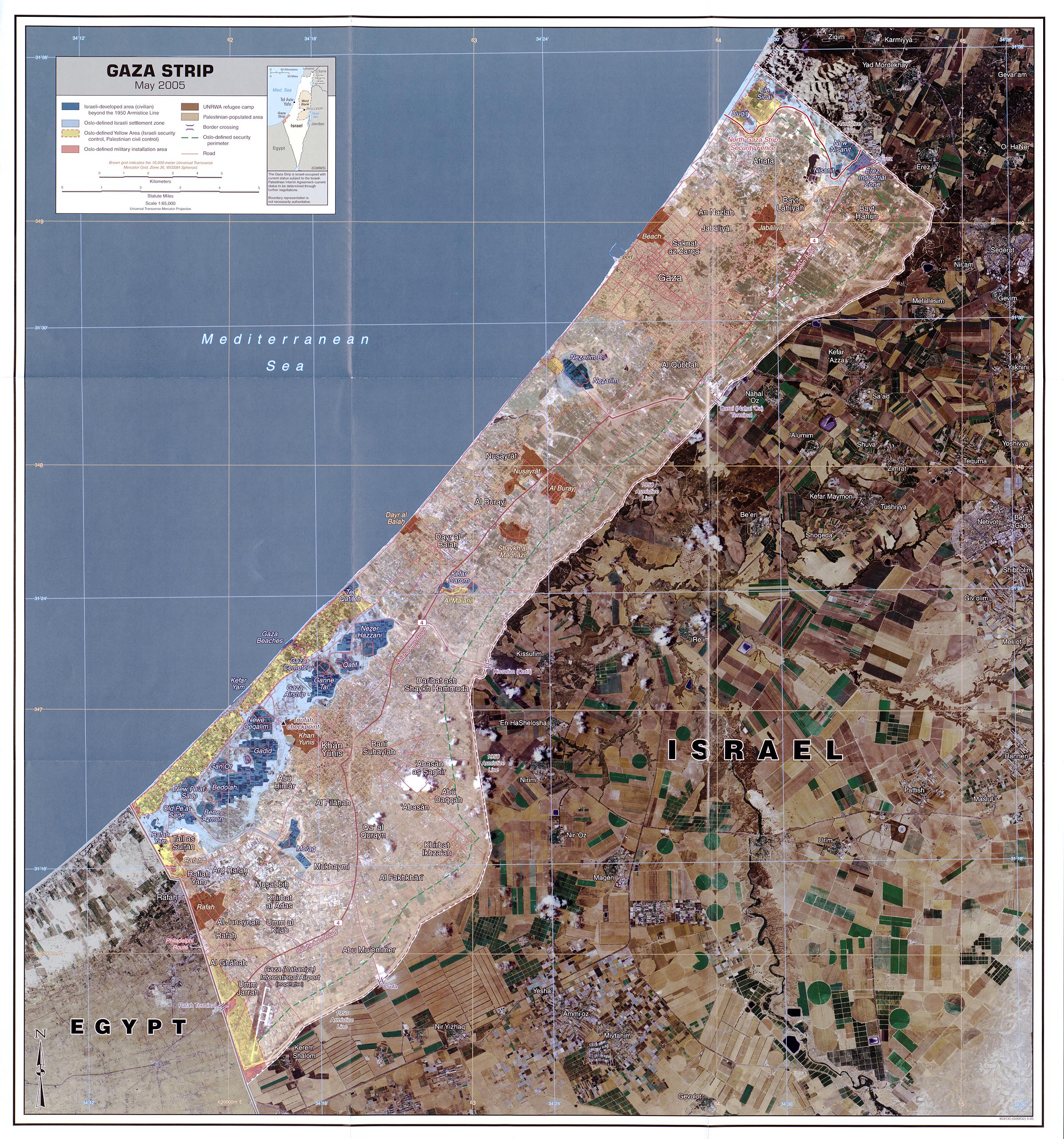
Photo from: http://www.lib.utexas.edu/maps/middle_east_and_asia/gaza_strip_may_2005.jpg

Rebecca Fullan has faith, seeks understanding. And sometimes vice versa.


Read more!

January 16, 2009

My Aunt Mary

From the Pews in the Back is becoming more and more real every day (we just received the proof pages!). As Jen & I gear up for the book's printing, my mind is wandering more frequently to the kinds of conversations and questions that might happen around this book.

My Aunt Mary is my dad's oldest sister. She's in her mid-60s and was at a Franciscan college during Vatican II. She loves the liturgical changes and is always ready for a theological debate. I saw her over Christmas and she was eager to tell me that she is an avid reader of the Call to Action Young Adult Catholic blog. A friend of hers had forwarded her the link and they both read daily and discuss it occasionally.

This is so exciting to me! I love that these women are excited about what young adult Catholics are thinking and blogging about....and I am very impressed by their tech-savviness.

I am hopeful that this book and blog engage conversations and discussions.

What kind of conversations would you like to have with Catholics of older or younger generations?
Kate Dugan is one of the co-editors of From the Pews in the Back and is indebted to Aunt Mary for countless conversations about American Catholicism.

Read more!

December 2, 2008

El Salvador Martyrs

December 2nd is the 28th anniversary of the murder of four American women in El Salvador - Ursuline Sister Dorothy Kazel, Maryknoll Sisters Maura Clarke and Ita Ford, and Maryknoll Lay Missioner Jean Donovan.

I first learned about these women 10 years ago. I lived in Philadelphia one summer during college and worked for the School of Americas Watch Northeast. The agency’s offices were located in a large house and when I arrived, the house was known as the Maryknoll House. I soon learned that they were in the process of changing the name of the house to the Jean Donovan Community Peace Center.
This additional piece of news meant nothing to me, as I had never heard of Jean Donovan. I barely had a grasp on the School of the Americas and the Maryknolls. That summer in Philly, I felt completely out of my league - I had so much to learn about social justice and Catholic social justice was just another layer. I asked a lot of questions, including who Jean Donovan was.

I learned that she was one of four women living and working in El Salvador during the late 1970’s. They worked for different parishes during the government’s war against the poor, ministering to the communities they lived in. As the political situation worsened and the threat of violence on foreigners increased, they still stayed in El Salvador. In a letter Jean wrote during that time, she said she believed God had brought her there and wanted her to stay and so she was going to try to live up to that call.

I was struck by her conscious decision to stay. How many times do we hear God’s voice but ignore it because it’s not the answer we want? Or think we hear God’s voice but don’t act, waiting to see if we can hear something that we like better? There are many who talk about being still and hearing God’s voice. But hearing God’s voice is only half the battle. We have to hear the call – and answer it.

As I learned Jean’s story and the stories of the three other women, I noticed in myself a variety of feelings. Anger, sadness, frustration. And yet, a lot of hope. Hope in the goodness of people and the beauty of a world where we hear God’s voice.

May we all have the faith to hear God’s call for our lives. And like Dorothy, Maura, Ita and Jean - the courage to answer it.

Deb Heimel lived at the Jean Donovan Community Peace Center during the summer of 1999 and is grateful to all of the people she met there who continue to inspire her today.

Read more!

November 28, 2008

Catholic Diversity

Although I don’t remember it being an issue when I was younger, I now marvel at the fact that I grew up with parents who had a “mixed” marriage. My mother was and still remains a Southern Republican from New Orleans, and my father maintains his roots as a New England Democrat from Worcester. My parents’ Catholic faith was one of their strongest commonalities. I find it ironic that they find common ground in the Catholic Church when the spectrum of perspectives or Catholic “parties” often seems equally—or even more—polarized than the American political system. Controversial issues, such women’s ordination, homosexual marriage and abortion, cause deep divides between members of the Catholic Church. How can Catholics, especially Catholic women from differing experiences and perspectives, worship together and support one another?

During this past presidential election, I asked my dad how he and my mom coped with having such different political views. He first responded jokingly saying, “We just agree not to talk about politics and we know that our votes cancel each other out!” When I pressed him further, though, he admitted that they alternate; they each watched the others’ political convention, they watch Fox News as well as CNN, and they read both The Houston Chronicle and The New York Times. After being in Catholic schools both as a student and an educator for more than 24 years, it seems to me that people frequently—but certainly not always—follow the “we just don’t talk about it” or worse, “we just don’t talk to one another because we know we disagree” approach. If we are all one body but with many parts, how do we go about “walking” together? The image of a three-legged race pops into my mind.

Reflecting on running an individual race versus running in a three-legged race, the partners can choose a leader, or decide to share “the decision-making.” Regardless of how the duo decides to face the challenge of advancing, they must communicate in order to move forward. This analogy obviously has limits—the Church is not in a “race” to the heavenly finish line. Yet it is easy to hear or exclaim, “We merely need dialogue between the differing parts of the body.” I agree that dialogue is needed within the members of the Church. I, however, get frustrated with people from the “other-side,” who seem completely blind to what seems so obviously “the right way” for me. Yikes, this is scary to admit!

The beauty of the Catholic Church is the inclusion of people who see and experience the One, True God in so many different ways and struggle to live in a faithful way. But what happens when the Body leans toward eliminating some of the voices of those parts and allows for only one voice to be heard? I am not suggesting that the church become a democracy, but I do think that silencing voices becomes dangerous. It is challenging to listen to the other side (a challenge that I am working on personally but not necessarily succeeding at very well). If the Body of Christ could be likened to a multi-million-legged race, how is that we could successfully move toward the Kingdom?

M. Nelle Carty has never really been a champion three-legged race contestant, but continues to have hope that one day she can improve those skills. Until then, she is concentrating on her studies in the final year of her Master of Divinity.

Picture taken from: www.sunnybreaks.org/ tag/leapfrog/


Read more!

November 25, 2008

School of the Americas Protest: Day 2

Today is the Vigil at the gates of Fort Benning, my most favorite day of the weekend. The energy is apparent here. This year, it feels different to me. It may be that I am just different, but the environment this year is noticeably calmer to me. It is less angry, more hopeful, less charged and more familiar. I cannot decide if this tranquility is appropriate or not as we are supposed to be protesting. Then again, we are also participating in a funeral procession of kinds, and peacefulness should always be embraced.

As we say “Presente”, I like to imagine that we are calling upon our ancestors. We are calling upon the spirits of our brothers and sisters to be with us as we honor them. Cross-cultural researchers have demonstrated that it is common for the living to be led into ritual communication with their deceased relatives. We long for this connection out of our respect and love for those who have gone before us. I grew up in a family that commonly referred to this as the “Litany of Saints”, but I realize today that there exists a billion ways to do this. I am participating in one, and it is sacred. It is powerful. It is a necessary element for some sort of healing to take place, and although we can never completely mend what is done, we are starting new again.

Read more!

November 24, 2008

School of Americas Protest: Day 1

Editors' Note: Theresa Lauer is a guest blogger for Young Women & Catholicism, reflecting on her experience at the annual School of the Americas protest, where 12,000 people gathered in Fort Benning, Georgia, this past weekend.

How would my life be different if I did not live in fear? I claim this as my mantra for the weekend. How would my life be different if I was not afraid of anything? What would my relationships be like? Would I love more? Love better? Would I feel freer to participate in things that make me feel alive?

Today as I walk through the rally at Fort Benning, I feel overwhelmed by all the bustling people, pressing issues, clashing sounds and array of faces. Some faces look familiar. There is the dynamic man who organizes the puppetistas every year. There is the gray-haired woman who led the Chilean delegation. There is the same radical man who is passing our pamphlets on being vegan. Some faces remain unknown. Yet, perhaps that is why I am here. Again. To name those who have suffered in our name. To name those who must be held accountable for their actions. After all, I am in the position to do so when so many others are not for fear of torture or death. I do not live in the same fear as they do, and although this is its own injustice, I cannot make sense of it today. It is too much for me to understand. So as my mantra repeats inside my head, I decide that I will be here today in fullness. I will stand confident and strong. I will give those whom I am representing a good witness. Today, I will not live in fear.

A Milwaukee native, she is in her third year at Marquette University studying Psychology, Studio Arts and Spanish. This was her third time traveling to Fort Benning, Georgia to participate in the vigil and has been active in the movement to close the School of the Americas (SOA/WHINSEC) for the past few years. She loves being surrounded by art, music and creativity- all good things in life.

Read more!

November 19, 2008

Catholic Charities & Prop. 8

Like so many Americans, I owe a lot to Catholic Charities, the oldest and most active Catholic social service network in the country. Twenty years ago Catholic Charities of the Diocese of San Diego, California arranged the adoption of my younger brother. I remember the day he was brought home from the hospital as one of the happiest days of my life.

Over the past several months, groups in favor of California’s Proposition 8 – the proposition banning gay marriage in the state – ran ads exploiting the 2006 closure of Catholic Charities’ adoption agency in Massachusetts after anti-discrimination laws required that an agency receiving money from the state (which Catholic Charities does) could not discriminate on the basis of sexual orientation against any married couple seeking to adopt. Catholic Charities of Massachusetts found itself caught between its desire to assist all adoptions (especially those of hard to place foster children) and the Vatican’s prohibition of adoption by same-sex couples. The California ads argued (evidently effectively) that the only way to prevent a similar end to Catholic Charities’ adoption agencies in California was to nip the equal right to marriage in the bud.

In the midst of the passage of Proposition 8 and ongoing public outage, I have been pondering the role Catholicism has played and should play in this controversy. One option for a Catholic like me – who supports both the universal right (rite) of marriage and the good and necessary role of Catholic Charities’ adoption agencies – is to continue to fight against propositions like 8, and in the event of their defeat, hope for the privatization of Catholic adoptions. The adoption service could then continue separately from the state and in line with the wishes of the Vatican.

However, a private Catholic adoption service that defines marriage solely along official church lines still perpetuates a form of discrimination. As a Catholic I often feel myself caught in the murky tide-water between the official stance of the Vatican and what I believe I am called to do as a follower of Christ. I feel caught not because I believe I should do what the Church tells me, but because of the good the Church does do. A church should not have to choose between religious freedom and good works, but the Church must also be open to changes in the hearts and minds of all its members such as those demonstrated by the resounding cry of outrage over the passage of Proposition 8. Rather than abandon adoption work or shuffle adoptions by LGBT couples discreetly to other agencies when the Church finds its values compromised, perhaps it is the values themselves that must be reexamined. Maybe then will we as one Catholic church, gay and straight prospective parents together, truly be able to extend our arms to the needy – especially when it is homes for children that we seek.

Rebecca Curtin lives in Somerville, Massachusetts and works for the English Department at Harvard University. She always misses California, despite its political liberal/conservative split-personality.


Read more!

November 10, 2008

A Lesson in Hope

“The road ahead will be long. Our climb will be steep. We may not get there in one year or even in one term. But, America, I have never been more hopeful than I am tonight that we will get there.” Tears ran down my face as I drove to work on Wednesday morning. Listening again to the words of Obama’s victory speech replayed on NPR, I cried as I had the night before, with excitement that change truly is possible. I walked into the faculty lounge and joined some of my colleagues as they buzzed around the coffee pot with tears of their own. I ventured to my classroom only to throw aside my baptism lesson plans to listen to the thoughts and ideas of my students.

Understandably, the school had asked us not to disclose any political opinions in our classes, a difficult task during the weeks leading up to the election since “I can’t tell you” only seemed to ignite a wildfire of questions.

“Ms. Ma’ake, who did you vote for? We won’t tell that you told!”
“Are you extra happy this morning?”
“Did you say the Pledge of Allegiance with extra umph this morning? Ms. Katana totally did!”
“Blink twice if you voted for the person who won!”

And finally the question I had been waiting for came. “Can we talk about Prop 8?”

I was surprised that the CA initiative to ban gay marriage hadn’t already come up in class. Every hand shot up.

“Can I ask a Church question? I don’t understand how we’re taught to love everybody, but the Church isn’t really accepting of gay people.”

As difficult as it is every year when this topic arises, I was glad that they were thinking, and questioning, and beginning to form opinions. The whole class looked at me, expecting me to say we had to start the baptism chapter, but instead I asked them to put the chairs in a circle so we could discuss. It was the fastest I had seen them move all year. I reminded the girls to be respectful of each other in their comments, briefly explained Church teaching, and pointed out that the Prop 8 initiative in CA, although related, was a separate issue than the Church’s stance on homosexuality. I watched as the discussion unfolded organically – as they shared how they felt and questioned the state, the Church, and each other. I didn’t have to say much (a good thing since there wasn’t much I was allowed to say) until the very end of class.

“Ms. Ma’ake, how come gay people don’t just get frustrated and leave to form their own church where they can get married and do what they want.” Suddenly I thought back to a liturgy class I had in grad school. Frustrated with what seemed to me like ridiculous and backwards moving liturgical regulations, I asked my professor, how she could still work in her field with so much to be angry and disappointed with. I found myself giving my students the same response she had given me. “Because they love this church. Because this faith tradition belongs to them too. Because Catholicism is something many can’t and don’t want to walk away from. Because people still believe that change is possible. Because if they leave and stop pushing and questioning and educating others on the importance of pushing and questioning, who will? And then how will change ever take place?” Heads nodded, “that makes sense.”

I was struck by their understanding of what it means to treat all people with dignity and respect and equality. I was struck by their enthusiasm and youthful confidence that “when we’re old enough to vote, we’re going to change things!” I was struck by the hope they filled the classroom with. When I talk about virtues in class we spend time redefining hope and correcting the false understanding of “hope” as “wish.” Hope, instead, is envisioning a change and then putting in the difficult work necessary to make that vision a reality. I was overjoyed that my students understand and live this notion of hope. They envision a change – a more just state, Church, and world. They hope.

I don’t think the reality of how significant this moment in history truly is has hit me yet, but I left school on Wednesday renewed and more hopeful than I have been in a long time, not only because of the change that is already taking place, but more so because of the change that is on the horizon.


Tefi Ma’ake spends much of her day either laughing (internally) at the silly things her students say or pondering the profound wisdom 16 year-old girls sometime surprise her with, all the while encouraging an honest and necessary questioning of faith and Church. Currently a high school teacher and campus minister, Tefi soon hopes to pursue doctoral studies in the field of religious education and multicultural theology.

Read more!

November 5, 2008

A Civic Sacrament

The highlight of my eighteenth birthday was not buying cigarettes or getting into the clubs – it was my mother driving me to city hall so I could register to vote. No, seriously. It was February, 2001, a good three years from my first presidential election, but I had been waiting for this moment since I first knew what voting was.

The first memory I have of electoral politics was the 1988 presidential election. My mom and I lived with her parents in upstate New York. I remember the Dukakis button on my mom's pink ski coat as clear as yesterday. My Poppy told me that he wasn't just a Democrat, he was a union member, and that meant an awful lot in deciding who to vote for. It was then that I couldn't wait to be part of the excitement of making the big decisions about the future of my country. Since that formative moment, politics has almost been like a religion to me. My childhood idols were, equally, Joan of Arc and Elizabeth Cady Stanton.

Political identities, like our spiritual identities, are a way of navigating the world in a manner that coincides with our most deeply held values. Leading up to the 2002 election, I wore my green Wellstone button with the same regularity as I wore my miraculous medal. When the electoral process elicits this type of fervor, it can be difficult to remember that people of good conscience can come down on different sides of the same issue. While it may be easy to demonize someone who supports the Iraq war or legalized abortion, it is necessary to approach political discourse with a spirit of charity. No doubt, each of us have reached this time and place with deeply held convictions that we hope reflect God's love, and the best way to spread that love in a world still imperfect.

I've voted for Sheriff in Venango County, caucused for Kucinich in central Minnesota, and am anxious to cast my ballot on Tuesday. In my experience, voting has taken on a sacramental tone. We are, in the voting booth, alone with God and our conscience, not too much unlike confession. Democracy is a blessing and a responsibility. Jesus says in the Gospel of Luke, "Much will be required of the person entrusted with much, and still more will be demanded of the person entrusted with more." For those of us so blessed to live in a time and place where we, as women and as citizens, to be able to have a fair and equal say in who will lead our country is nothing to take lightly. I pray that as each of us (in the US, anyway) head to the polls on Tuesday, we will do so in a spirit of hope and love for our neighbors – especially those with whom we disagree.

Johanna Hatch is a feminist activist, writer, and amateur hagiographer living in Wisconsin and working in non-profit administration. Her least favorite thing about autumn in the Midwest is snow before Halloween.

Read more!

October 30, 2008

The Personal Is Political

My sister got married two weeks ago. I thought I knew how the preceding weeks would play out, as my brother had gotten married eight weeks earlier. But there was one conversation leading up to this wedding (which, unlike the last one, would be a full nuptial Mass) that really did surprise me. It began rather casually: “So, are you going to take communion at your sister’s wedding?”

Almost everyone in my extended family claims “Catholic” as part of their religious identity, most with qualifiers:
lapsed, progressive, recovering, conflicted, faithful, or (my personal qualifier) faithfully conflicted. We all knew the “rules” around receiving communion, and knew everyone else at the wedding would, too. In this conversation, it became evident that we all had reasons why we thought that taking communion might seem improper: not having attended Mass in weeks/months/years, lacking belief but not respect for the sacred act, or having one of those markers that may or may not disqualify you, like divorced and remarried or (me again) in a same-sex relationship.

What was causing so much hesitation, I gathered, was the very public nature of this particular Eucharistic celebration. Unlike at regular parish Masses, almost everyone in the congregation at this wedding would know us in contexts outside the Church. Being seen taking, or abstaining from, communion, could be placed by anyone observing in the context of our individual histories, opinions, and commitments. What would normally be considered a personal, spiritual matter suddenly felt public and even political. If most of those present were aware of one’s opposition to the hierarchy on certain fundamental matters, not taking communion could become a political act, a way of silently but boldly registering that complaint in the minds of those present. On the other hand, taking communion in that same circumstance could be just as political – a way of saying that one’s personal faith experience need not be dictated by the hierarchy’s rules.

This was a poignant question for me, I realized, as it would really be the first time I would take communion – or not – in a setting where almost all present knew I was gay. Not taking communion could draw attention to the Church’s unjust and exclusionary practices toward LGBT people. Taking communion could be a way of standing up to these practices, of publicly stating that this is my Church, my faith, too, and I won’t let anybody decide for me whether I am worthy of it.

I’d always thought that social action belonged in the realm of faith-between-Sundays. Mass was what we did to nourish ourselves for work in the world, not itself an arena for social action. But this conversation made me rethink this division, and helped me for the first time to integrate my strongly held feminist/activist convictions with my deeply personal experience of the Eucharist, making it evident that, as always, the personal is political. Even a small and silent act has the power to make people think and question, to reorient people in unexpected ways toward injustice in the world and injustice in our Church.

Kate Henley Long is a choreographer, writer, nanny, queer activist, and avid watcher of crime shows. She and her partner live in Cambridge, MA, and will not be having a full nuptial Mass when they get married.

Read more!

October 16, 2008

That Elusive Thing Called Community

“We have all known the long loneliness, and we have learned that the only solution is love, and that love comes with community.” –Dorothy Day
Today was a beautiful October day. I stepped outside to catch the last of the sun as soon as I got home from work. It’s that time of fall where the trees have dropped about half their leaves, so walking down a street lined with ash trees is like strolling through a golden tunnel.

Yet despite the beauty, my heart was filled with heaviness. It was Friday night, and I was alone. I was slung with the prospect of a wide open night with absolutely no plans—this suddenly lacked the allure it had in the middle of a busy work week. For a moment I felt overwhelmingly alone.

Solitude has been a common theme for me as of late—I recently moved into an apartment for the first time by myself. Since college I have been on a steady path of downsizing, ever since the highpoint of 11 roommates during a year of vounteering and community living after college. So I was very excited about a place all my own—I couldn’t wait to organize and decorate just how I liked. Yet I don’t think I fully thought through the intangible aspects of living alone. Now it seems a very long way from that house of 12.

That year working with the poor, I saw again and again the results of broken relationships. People isolated, on the street, with no one to turn to. I was reminded again and again that all of us are fragile, that nothing in life is a given. The bottom can fall out for myriad reasons. If we have someone to turn to, we’re probably going to get back on our feet sooner. But so many don’t. According to John Cacioppo, author of Loneliness: Human Nature and the Need for Social Connection, Americans report having “significantly fewer close friends and confidants than a generation ago.” And it is estimated that by 2010, about 10 percent of Americans will live by themselves. Community is so hard for us Americans! We value independence so much.

At one time I think community was created by one’s neighbors, and one’s parish. This was certainly the case for my mother and her large Catholic family, growing up in a working class neighborhood of South Minneapolis. Yet in 60 years, that neighborhood has completely dissolved from what it once was—everyone has moved on. There are a number of reasons why that urban community is no longer, too many to expound upon here. But there’s no doubt it’s a difficult thing to create and maintain community. It takes sacrifice, and a lot of continual work. It requires putting down roots, and saying “enough.” It requires making time for people. It is not always fun—yet it can create a great deal of richness. And therein lies the discomfiting, nagging paradox.


Kate Lucas lives in Minneapolis, MN, where she writes grants and many other communications for an international NGO that supports communities in Guatemala. She served with the Colorado Vincentian Volunteers several years ago and now scratches out poetry and knits in her free time.

Read more!

September 25, 2008

Las Casas and the Law of Love

I've spent the last week immersed in the Confesario, an instruction that Bartolome' de las Casas wrote c. 1547 instructing the confessors in his bishopric in the way to handle confession of conquistadores, encomenderos, and merchants involved in the arms trade that fed the Conquest. Based on a radical understanding of Jesus' law of love, las Casas calls on his confessors to grant absolution to such individuals if they are willing to free the indigenous slaves in their charge, allegedly for instruction in the faith. Not only must they free these people (and he does recognize their humanity and their agency, as many of his contemporaries did not), but they must also go to the communities from these indigenous people came to make restitution. In doing so, he is attempting to abolish the system of encomienda and the abuses that accompanied it, enforcing the New Laws that the church and the Crown had begun to overturn. Essentially, he and the confessors that follow his instruction are committing acts of civil and ecclesial disobedience in the interest of following the greater Law of Love.

Part of what is so compelling to me about his example is his understanding of love, in the private and public sense. His writings suggest that love of neighbor is deeper than simple kindness to her; it wants all that is best for her in the broadest sense. True love necessitates justice. And if that justice is not found, work for justice follows. It's a logic that defies the way we think about the church and the world and the false boundaries we often draw between them.

To what kind of love are we called today? To what kind of justice does that love push us to understand and to enact? Of what kind of change are we to be prophets in contemporary church and society? These are the kinds of questions this research raises for me, the kind I hope to discuss as work on this project moves forward.

En paz y esperanza,

Jen

Read more!